Unlocking vast water resources
Tuyen Quang possesses 18,600 hectares of aquatic acreage, over 500 kilometers of major riverways, and hundreds of natural and artificial reservoirs, expanding across prominent river systems including the Lo, Gam, Pho Day, Bac, and Chung rivers. Beyond framing the province's natural landscape, these waterways serve as the primary irrigation supply for local agriculture and forestry. This pristine, low-pollution water supply supports a rich ecosystem perfectly suited for farming premium, high-value specialty fish such as ca lang (bagrid catfish), ca chien (devil catfish), ca bong (river carp), sturgeon, silurid catfish, and black carp.
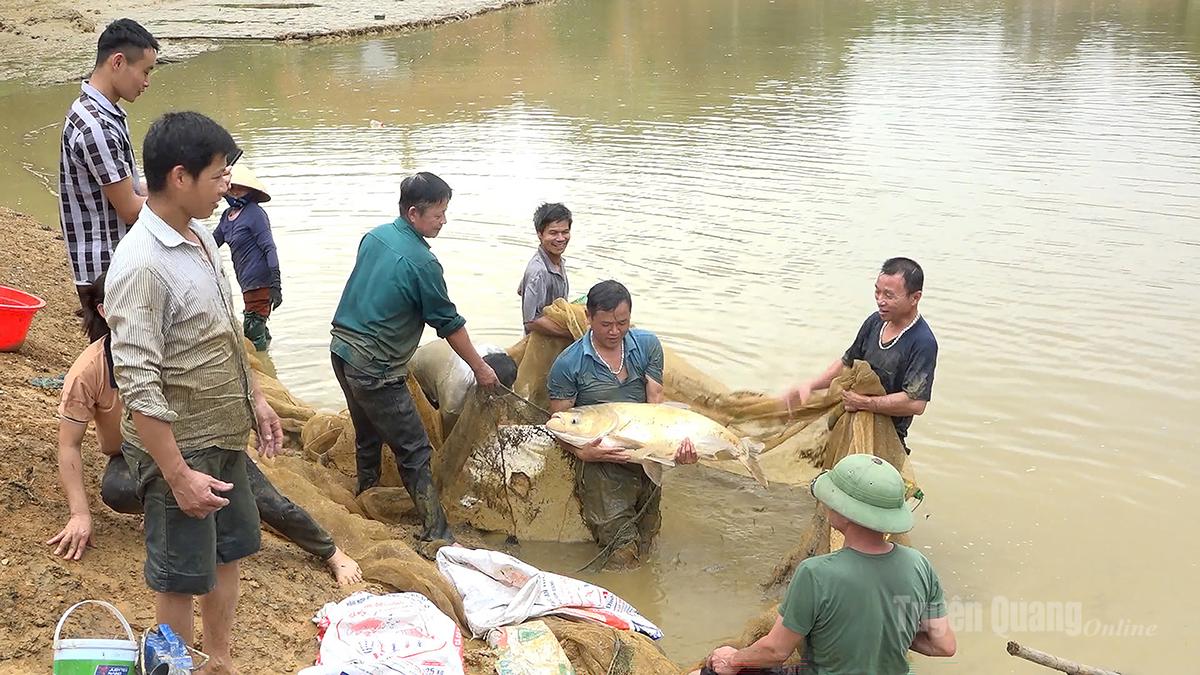
Local farmers leverage pristine water resources to scale up aquaculture operations
Across the expansive waters of the Na Hang, Tuyen Quang, Gam, and Lo hydropower reservoirs, thousands of large-scale fish cages now provide a dependable income stream for local smallholders. Notably, many households, cooperatives, and enterprises have aggressively invested in modern infrastructure and advanced husbandry practices, gradually turning cage aquaculture into a spearhead economic sector and a signature regional brand.
As of June 2026, the province’s total aquaculture area reached 5,616 hectares, operating 3,345 floating cages. Fish output for the first half of 2026 stood at 7,157 tons, representing an 8.4% increase year-on-year. This growth validates the province's strategic shift toward utilizing its reservoirs and river networks for commercial-scale aquaculture.
Shifting mindsets, maximizing value
The defining highlight of Tuyen Quang’s aquaculture sector in recent years is a fundamental shift in production mindset. Farmers who once prioritized volume are now focusing on quality, food safety, and supply chain integration. Local agricultural authorities regularly conduct technical training and technology transfers, successfully rolling out various specialty fish farming models compliant with VietGAP standards. This transition forms the cornerstone for enhancing the market competitiveness of Tuyen Quang’s local aquatic products amid rising consumer standards.
In tandem with quality upgrades, local households and localities are expanding investment scales and building tight commercial ties from farm to market. A prime example is Mr. Trinh Van Ha in Na Hang. From an initial setup of just 4 cages, he has expanded his operation to 70 cages. In 2023, he pioneered sturgeon farming in the hydropower reservoir, charting a lucrative new path for local farmers. By mastering technical processes and selecting highly compatible species, his model has yielded excellent economic returns, serving as a benchmark hub for regional best practices and knowledge-sharing.
The emergence of professional aquaculture cooperatives has successfully bridged the gap between smallholders and large-scale buyers, including corporations, restaurants, and major supermarkets. Through these off-take alliances, farmers receive robust technical backing while mitigating market placement risks. Consequently, Tuyen Quang's signature brands are gaining solid market traction; reservoir-bred ca lang, ca chien, and ca bong from the Na Hang, Bac Me, and Thuong Lam reservoirs are increasingly favored by consumers for their firm texture and premium quality.
Furthermore, the One Commune One Product (OCOP) program has enabled local fish products to cement their brand equity. The initiative has not only boosted brand awareness but also elevated farmers' commitment to standardized, market-driven production. Moving beyond low-margin raw commodities, many processors have invested heavily in deep processing - introducing value-added lines such as dried fish, smoked fish, fish cakes, and fish floss. This diversification extends shelf life, broadens market reach, and significantly optimizes profit margins for local producers.
Mr. Trinh Van Binh, Deputy Director of the Tuyen Quang Department of Agriculture and Rural Development, affirmed: "Aquaculture has emerged as a high-growth engine within our agricultural portfolio. Expanding reservoir cage culture and biosecure, VietGAP-compliant specialty fish farming does more than just boost rural incomes; it serves as a critical pillar in our broader strategy to restructure agriculture toward higher value-added margins and long-term sustainability."
Nguyen Thanh Hieu
From a Vietnamese artice on Tuyen Quang online