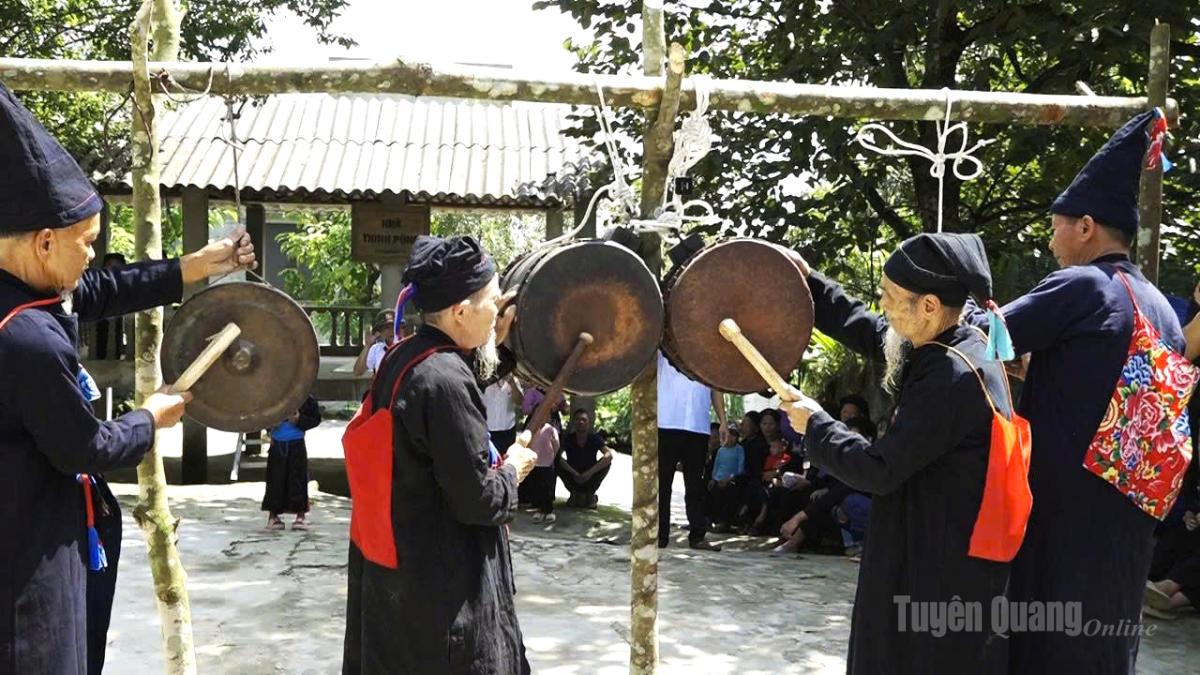
La Chi Artisans perform a traditional gong ritual during Khu Cu Te
When an entire community returns to its ancestors
Khu Cu Te is more than a traditional festival. It is a time when La Chi families return to their roots and reconnect with their ancestors and community.
During the festival, people gather to pay their respects to Hoang Van Thung, a revered village leader believed to have taught the people how to raise livestock, cultivate crops, clear fields and protect their land. Ancestors are invited to join the New Year celebrations, bringing together the living and those who came before them.
The rituals reflect a deep connection between generations, people and the land that sustains them.
Offerings that tell the story of La Chi life
The offerings prepared for Khu Cu Te carry the imprint of traditional La Chi life. Among them are a buffalo horn, a woven basket, a piece of ginger and Hoang rice wine.
Made from glutinous rice fermented with yeast prepared from forest leaves, Hoang wine has a cloudy white appearance and a distinctive, gently sweet aroma. A cleaned and dried buffalo horn is hung in the main room together with a woven basket and a piece of ginger, forming a distinctive ancestral altar.
These simple objects speak to a way of life shaped by farming, forests and close ties within the community.
One New Year celebration, many generations together
The rituals are carefully led by people with deep knowledge of La Chi customs and beliefs. The ritual leader is traditionally someone respected by the community, with a harmonious family life and a thorough understanding of ancestral traditions.
Their role goes beyond conducting ceremonies. They preserve prayers, customs and stories and pass them on to the next generation.
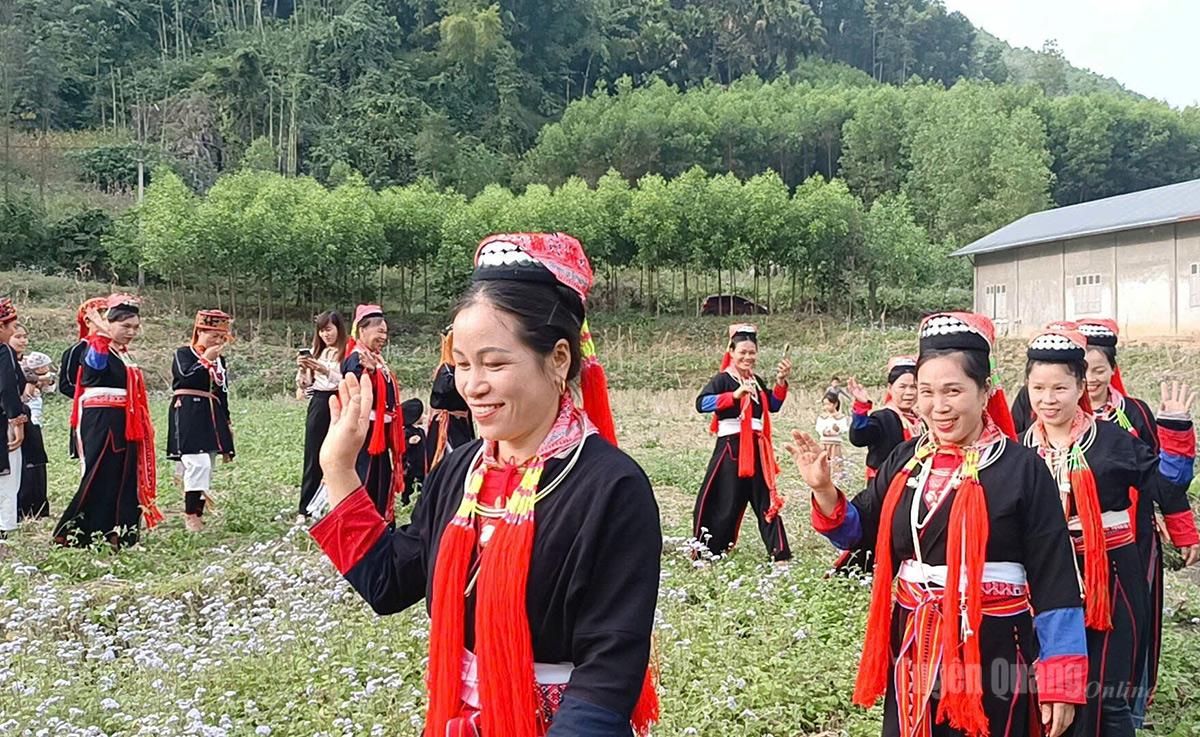
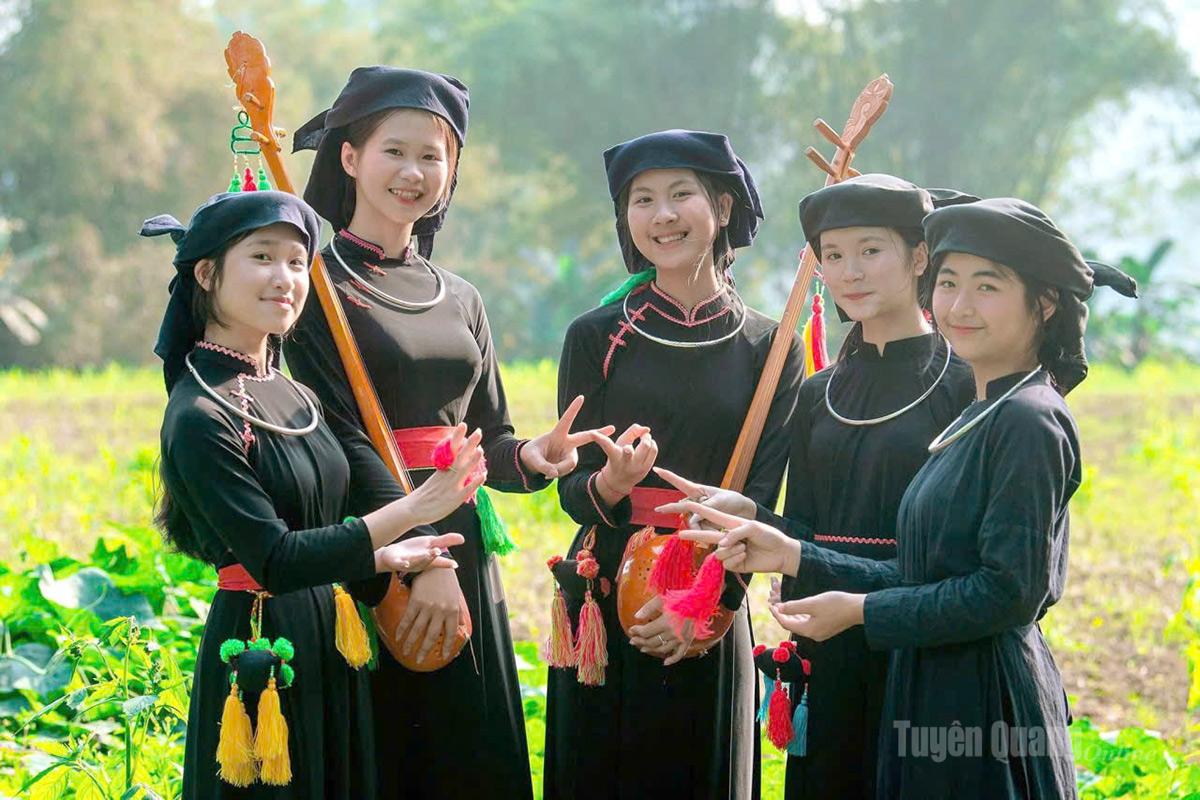
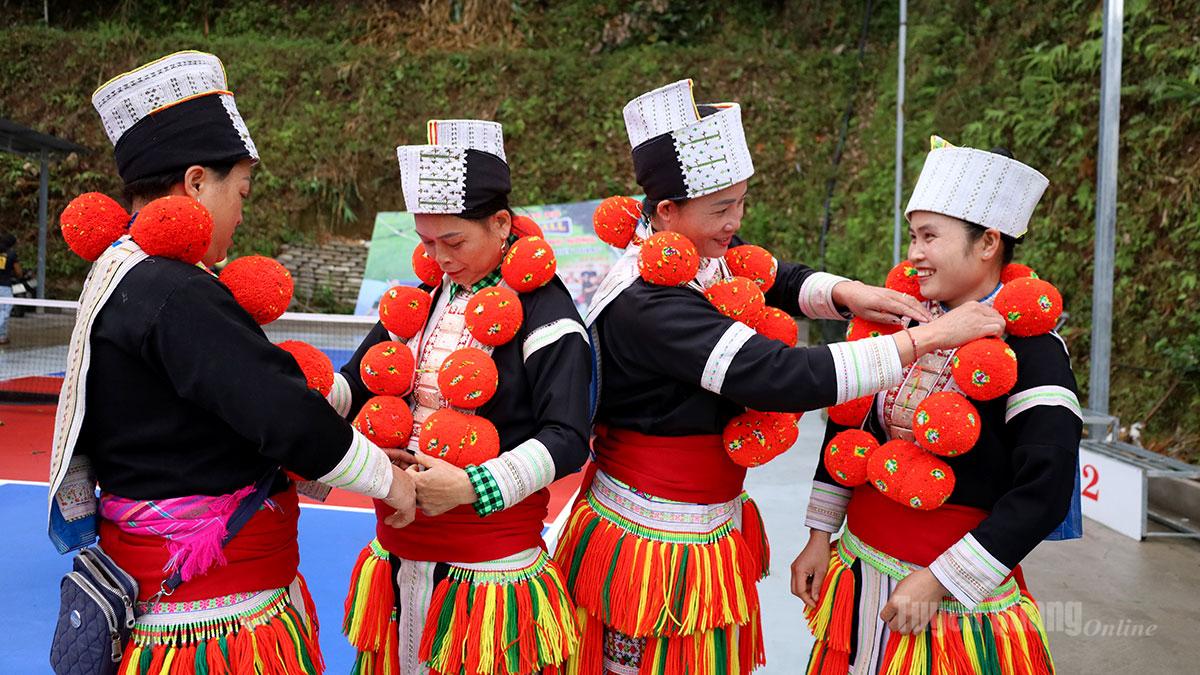
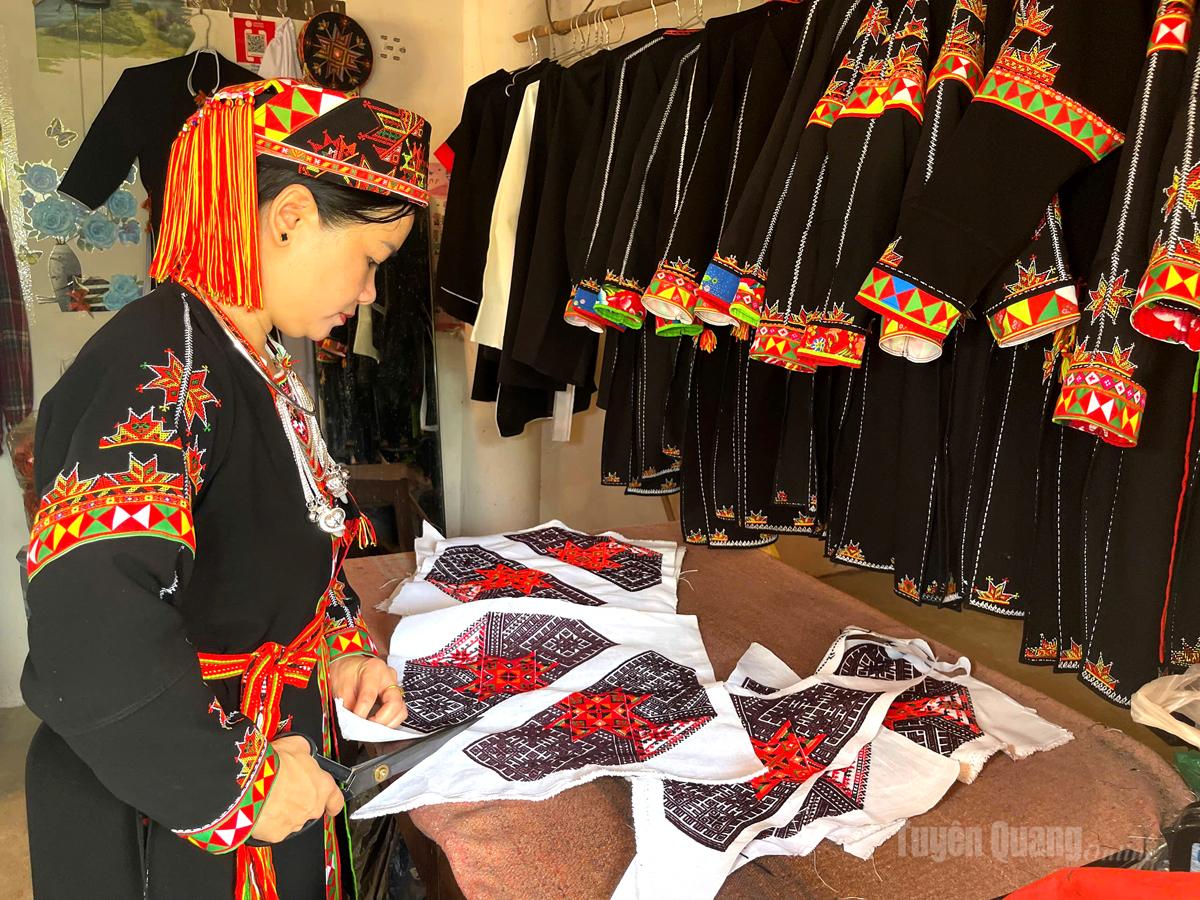
For young La Chi people, Khu Cu Te is therefore also a chance to learn by taking part. They listen to elders, join communal activities, wear traditional clothing and learn how to behave and observe customs during the New Year celebrations.
This is how culture remains a living part of community life rather than simply something remembered from the past.
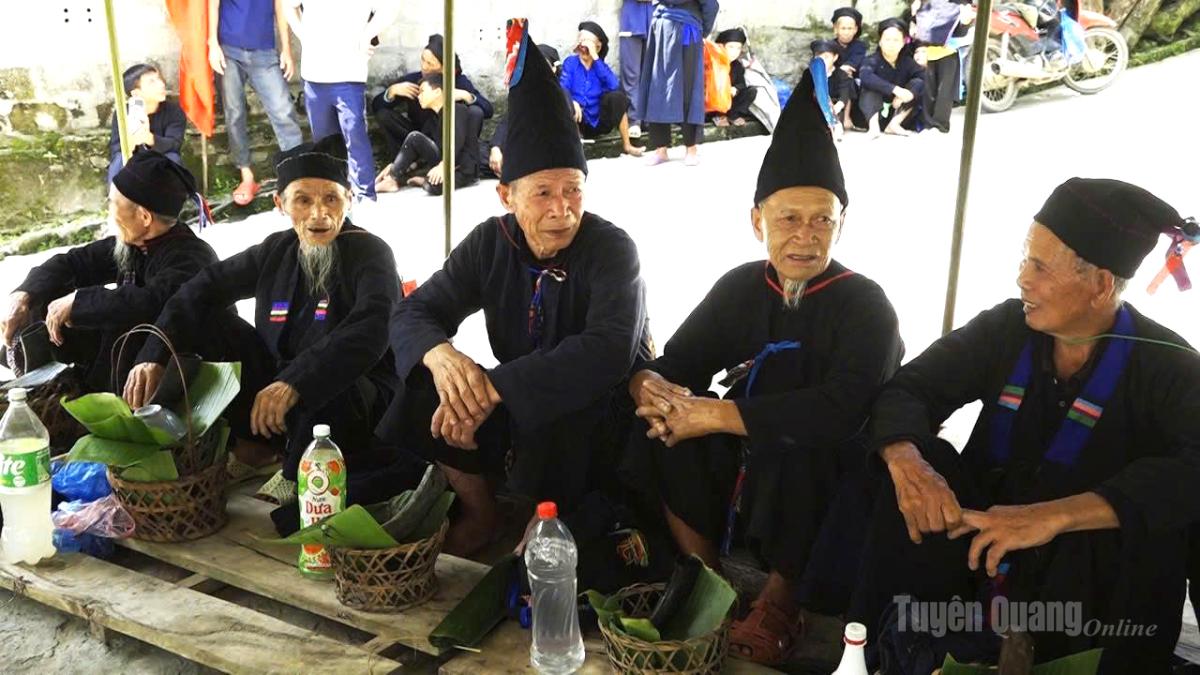
La Chi elders gather beside offerings prepared for Khu Cu Te
A New Year festival that calls those who have gone far away home
Perhaps the greatest value of Khu Cu Te lies in its power to bring people home.
Wherever La Chi descendants may live, the festival reminds them of their families, villagess and ancestral homeland. Before the celebrations, families clean their houses and ancestral graves and prepare glutinous rice, meat, rice wine and other offerings to welcome their ancestors.
At the village leader's home, families bring their offerings and gather around the ceremonial tray as prayers are recited. Elders recount old stories and ancestral teachings, while younger generations listen and take part.
At the end of the ceremony, villagers gather to beat drums, symbolically sending the ancestors back to the other world.
Modern life has brought some changes, with customs becoming simpler and more practical. Yet the heart of Khu Cu Te remains unchanged - gratitude toward ancestors, family bonds, sharing and solidarity within the community.
A living cultural heritage in the mountains of Xin Man
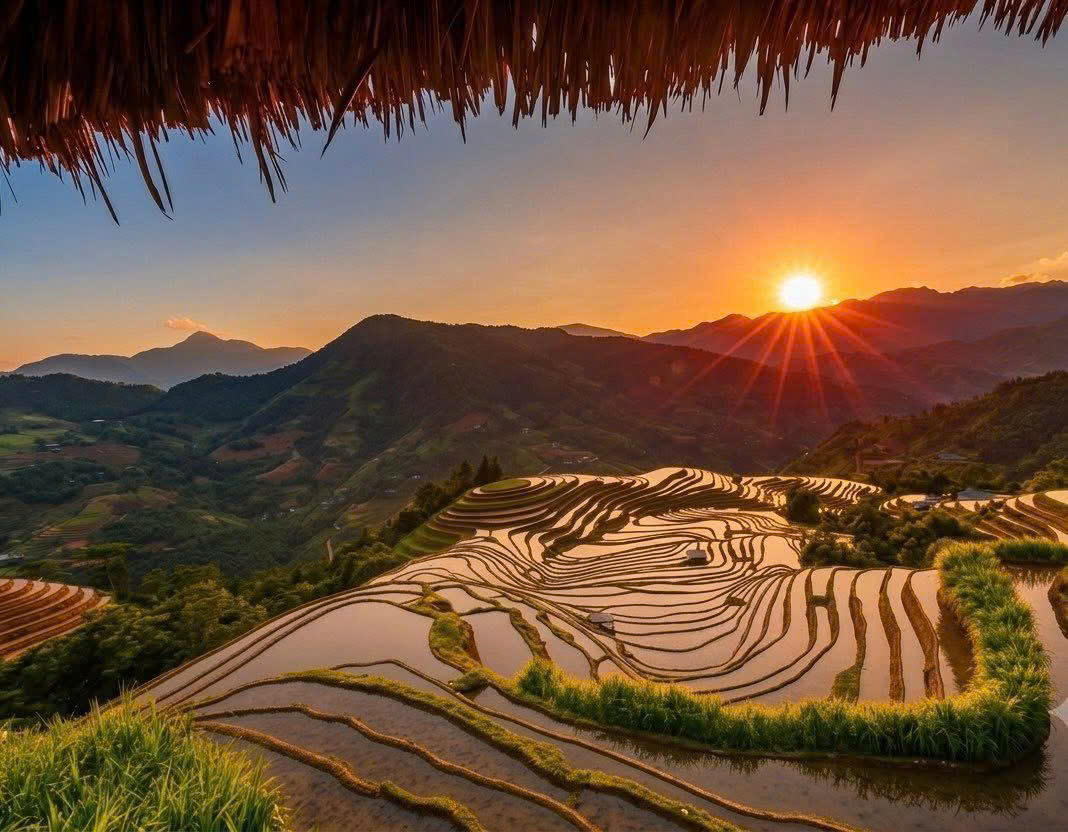
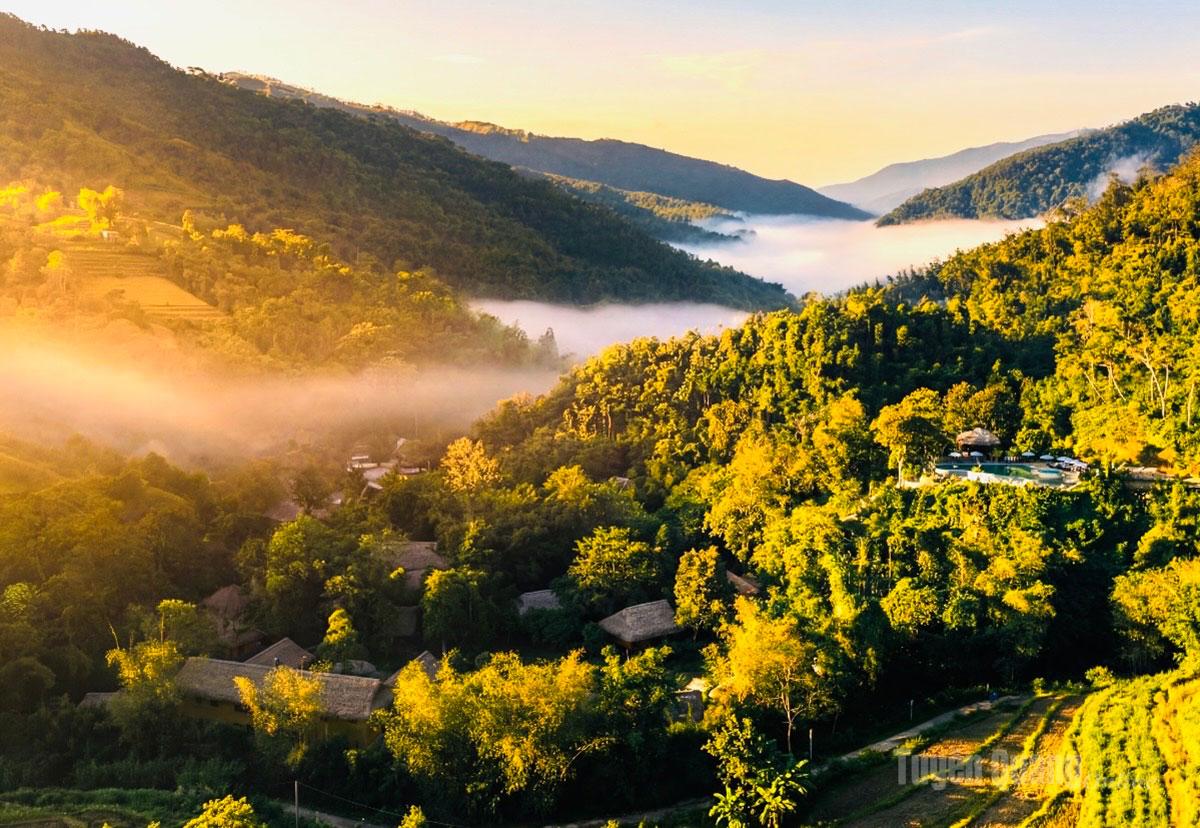
The La Chi are one of Vietnam's small ethnic communities, with a significant population living in western Tuyen Quang. Xin Man is home to around 882 La Chi households, providing a strong foundation for the preservation of their language, traditional clothing, houses, cuisine, beliefs and rituals.
Following the recent administrative reorganisation, Xin Man Commune was formed by merging Xin Man, Nan Xin, Chi Ca, Then Phang and Ban Diu communes, together with the hamlets of Dong Loi, Thang Loi and Dong Che. The expanded cultural and geographical space offers new opportunities to connect communities, landscapes and distinctive local products.
At the heart of this heritage is Khu Cu Te - a traditional celebration that continues to bring people together.
When the drums of Khu Cu Te echo through the mountains, they also carry a simple reminder to the La Chi people: wherever life takes them, there is always a place to return to - a place of family, community and roots.
Nguyen Thanh Hieu
Adapted from Tuyen Quang online