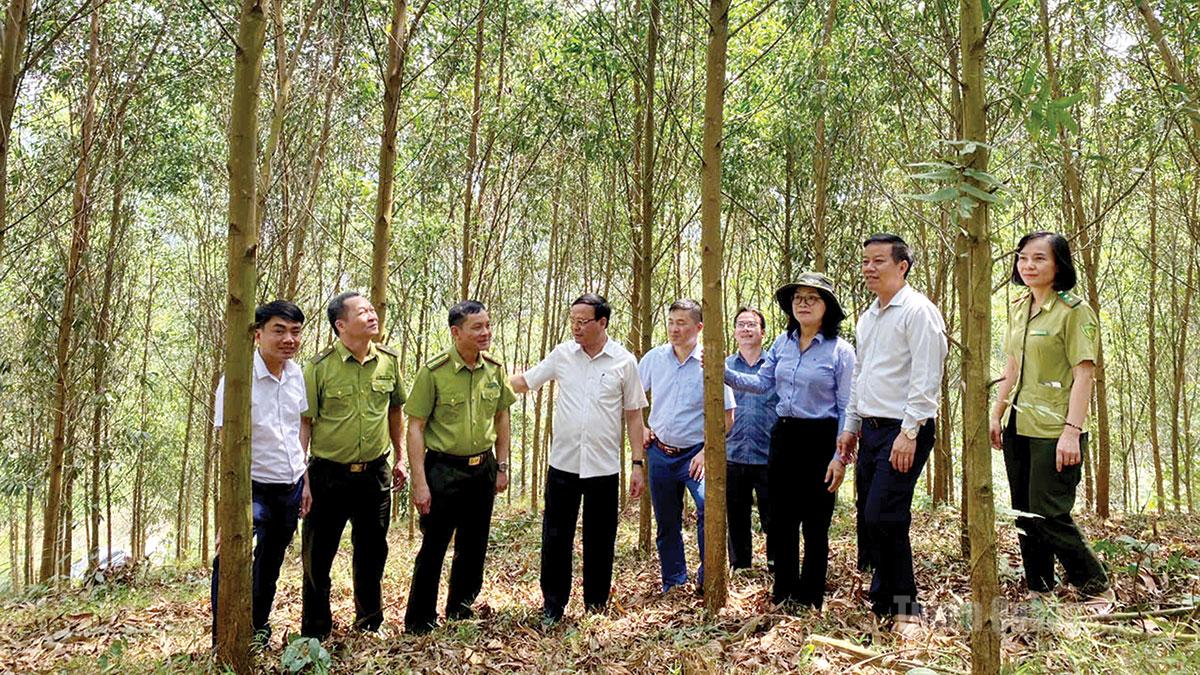
Mr. Nguyen Manh Tuan - Member of the Standing Committee of the Provincial Party Committee and Standing Vice Chairman of the Provincial People's Committee - inspecting forest management and protection in Trung Son Commune
Far more than just a leading national hub for paper raw materials, Tuyen Quang possesses exceptional carbon sequestration and storage capabilities. Forestry estimates indicate that each hectare of natural forest can absorb 100 - 250 tons of CO2, while acacia and manglietia plantations contribute 50 - 100 tons per cycle. Given its vast forest coverage, the capacity to sequester tens of millions of tons of CO2 represents a potential forest carbon credit source valued at hundreds of billions of VND - provided these assets are effectively leveraged and traded on domestic and international markets.
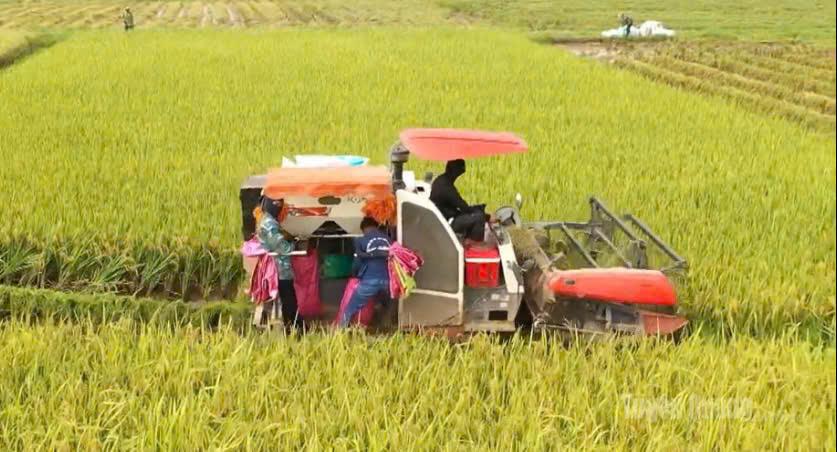
Beyond forest assets, a strategic priority has been placed on expanding organic and circular agriculture. This policy has resulted in over 30,000 hectares of orange and tea plantations attaining VietGAP and GlobalGAP certifications by 2025. Concentrated in key areas like Bac Quang, Hung An, Khuan Lung, Ham Yen, Na Hang, Quang Binh, Chiem Hoa, and Yen Son, these organic models avoid chemical inputs - thereby slashing N2O emissions and enhancing the region's carbon credit outlook.
Notably, several cooperatives and large-scale farms have adopted circular agriculture models, repurposing agricultural by-products into organic fertilizer to minimize chemical reliance, curb emissions, and restore soil health. To this end, specialized enterprises have been commissioned to research methane capture and conversion at large livestock facilities, aiming to quantify emission reduction credits. Once the domestic carbon market becomes fully online, farms adhering to standardized emission-lowering protocols will be able to generate credits for sale to high-emission industries.
At the household level, biological farming solutions are encouraged, including silage processing and bio-bedding to minimize direct emissions, reduce pollution, and ensure biosecurity. While these measures may seem small individually, their widespread adoption will generate a substantial reduction in the entire sector's emission footprint.
The burgeoning carbon credit market demands a profound shift in management, planning, and production within Tuyen Quang’s agricultural sector. Primary focus is being placed on finalizing carbon databases across forestry, crop cultivation, and livestock, alongside establishing Measurement, Reporting, and Verification (MRV) frameworks that meet international standards. These foundations will facilitate access to voluntary carbon markets, followed by compliance markets once the Government-mandated exchange becomes operational - expected between 2028 and 2030.
Leveraging its vast forest potential, organic agricultural base, and emission reduction efforts, Tuyen Quang is well-positioned to lead the green transition in the Northern Midlands and Mountains. When strategically harnessed, carbon credits will not only generate new revenue streams but also elevate agricultural value - fostering a sustainable future that harmonizes economic growth, environmental protection, and local livelihoods.
Nguyen Thanh Hieu
Vietnamese source: Tuyen Quang online